Images watch over me

Letter from Simon Quéheillard to Ismaïl Bahri


On Saturday, November 29, 2014 at 6 PM, the third encounter concerning the exhibition sommeils will propose a dialogue between Ismaïl Bahri and the artist Simon Quéheillard, on the subject of the latter’s work in progress ‘Une méthode de dispersion’ (‘A method of dispersion’). Before the encounter, Simon Quéheillard’s letter ‘Les images veillent autour de moi’ (‘Images watch over me’) prepares the way for the discussion to come. 

Link to the exhibition sommeils
Link to the letter


Dear Ismaïl,

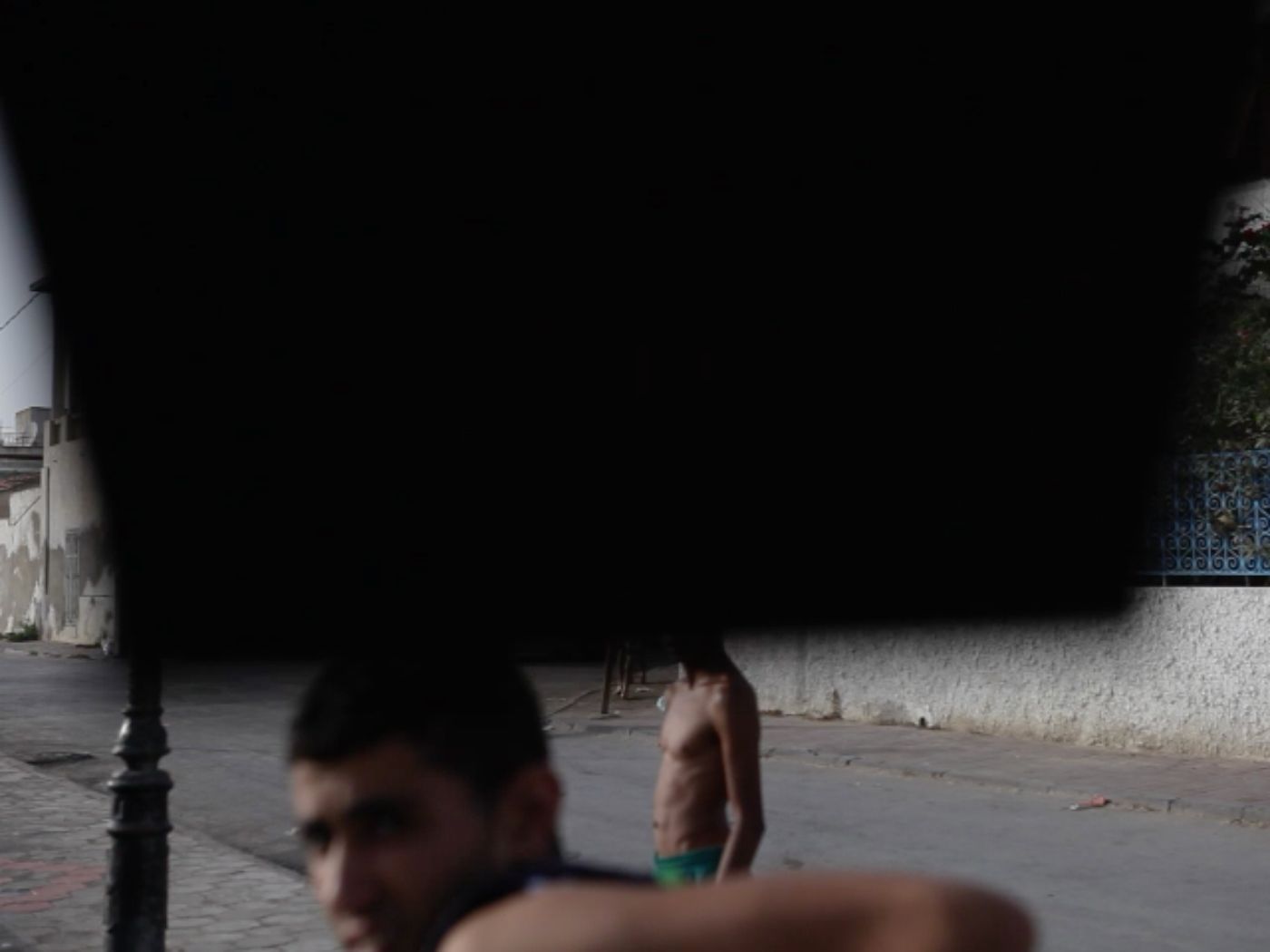
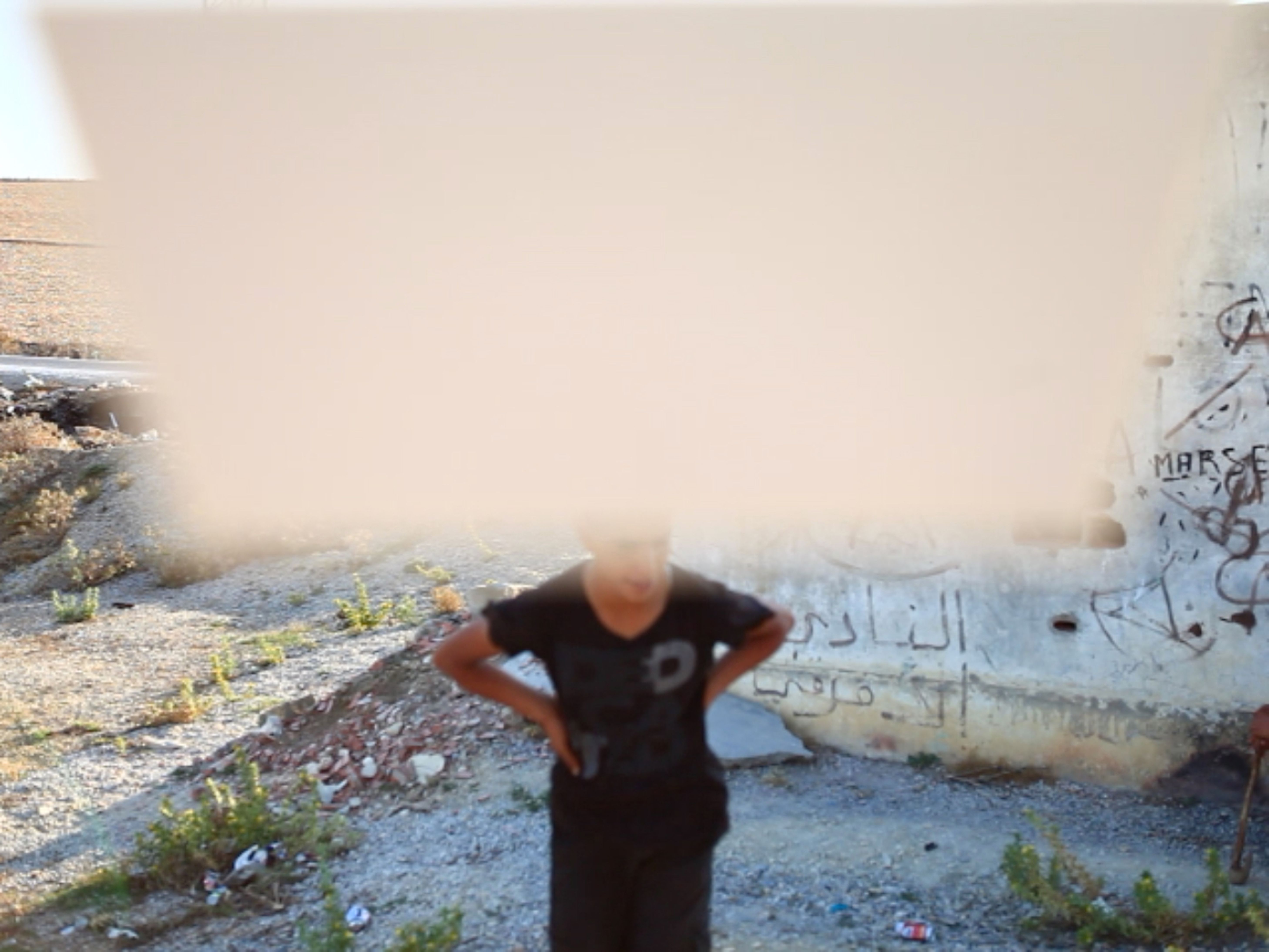
You’re back from the homeland and today we receive your filmed (post) cards of Tunisia. In this space where darkness reigns, never has nearsightedness been so strong. The projected images, now stretched out to the scale of a wall, seem like tapestries. Tapestries in a dark room. In this dark room of the exhibition space, images are succeeded by periods. Periods of light and dark, presented to us like “flashing eclipses”, followed by a few moments of brightness, some much more brilliant, others shorter or more frequent. The frequency is dictated by the wind, agitating the small cardboard rectangle set up to block the camera lens. Between here and there, the cardboard determines this permanent movement. Images of a far off land seen from here. Signals from a lighthouse, lighting the land of Tunisia. This dark room we find ourselves in, which simulates a mechanism. With the fluttering of an eyelid, our vision crosses the ocean. A nocturnal passage. As long as darkness dominates, we see only the grain of our own retinas. Sea and sky blended together form a great black wall. A close up vision of a depth-less space, with neither limits nor contours. After a moment, immensity can be felt. And the horizon is sketched in between the different shades of shadow. Moving from near to far, from retina to landscape.
 

"I leave you a light you’ll extinguish"
 

This verse by Claude Royet-Journoud, with its disconcerting and absolute simplicity, describes a situation of vigil in darkness. A phase succeeded by sleep, retracing word for word the trajectory of your exhibition. The obstructed images veil and unveil themselves infinitely. And so the itinerary traced is perpetuated endlessly. A journey that you embarked on. From one continent to another, incessantly retracing the path. Two blocks of contiguous space, where we hold ourselves back at the threshold. Each makes the other feel foreign. The space & the landscape.


ismail-bahri-eclipses-2013-5-300dpi.jpg


Images comme ça could be the name of this journey. To see things as they come. With no objective, to arrange things so as not to want. How do you betray your own intentions? Images do what must be done when intentions fail. Jack Spicer defined the poem as “not really wanting to not say what you don’t want to say”. Which for you (the cameraman-reporter) would become: “not really wanting to not see what you don’t want to show”. Beyond the vertigo of this triple negation, we could translate this to “not wanting what you want to show”. Or: “wanting to see what you don’t want to show”. Wanting is going to Tunisia. Not wanting is covering the lens with a small cardboard rectangle. And so sleep (le sommeil) allows us to surmount this.

What can I see, despite myself? What can we see, despite everything? And what remains of what you don’t see? Diverting our eyes from their objective, a shutter is attached to the lens. “Covering a part of the eyes or visual field of the animal.” This thwarted vision is a handicap. A system of blocking. To begin with, from what we experience awake, sleep ignores the most immediate things. Turning your back on what is in front of you. Blinders that serve to detach. As close to the retina as possible. So as not to assign an objective to vision, an image betrays itself. The way we perceive a halo around a candle, diverting the eyes from the flame. We don’t regard the halo of a candle. Seen from the back, these images circulate all around, on the borders. Tapestry in principle, describing “spaces that are not loaded with intention.” (Emmanuel Van der Meulen, catalogue for the exhibition Enten-Eller.)

No one looks at the background images, which are stronger than anything. And on the other side, while the film unreels, people are talking in the dark, with their hands. “The ocean doesn’t intend to be heard.” (Jack Spicer, C’est mon vocabulaire qui m’a fait ça.) Without a goal, it breaks on the shore. The images keep vigil and are not remarkable. Their flow is an undercurrent. They circulate freely without ever tiring. A hinterland. To no longer be able to fall asleep without the sound of the waves.

You returned there so that the images could return to us from that country. You ramble, dear friend. Blocked images. The obstruction distances us. Less a series of beginnings, as I believed at first, retention remains stronger than the possibility or the desire to see. Less a beginning, than a residue. A light in shadow. What remains in the constraint, the delay. Second-hand images. To call on memory at the threshold of sleep. You entrust the wind with the task of caring for the memory of the images. You are well-seconded in your enterprise. A current of wind crosses through your mind.

Second-hand images. Old washed-out stock. To let memory shine in loss. A filament, an image. Have you left? When will you be back? It’s always the last time for eyes that blink. The Mediterranean, “the middle sea”. To cross a passage by way of the shutter. Not so much from one image to the other (between two darknesses), as between two countries, two spaces. In the closing, the space is completed. The dark-room of a hinterland. Hoping that a closing will give way to an image.

And while the images unfurl, we become very tired, our eyes constantly thwarted by the shutter. Images with no intention of being seen. Like anything else, for that matter, that simply exists. The opportunity, in short, to see what we don’t care about. A cow or the ocean. Images for people who do not want them. And for the moment, the occasion to hear a commentary. Amongst other slumbers, a teacher practicing the Korczakienne method(named for the celebrated Polish pedagogue) confirms its positive results (Gisèle Jamet, Sur les docks, France Culture, April 25, 2013).

For example, if a student didn’t want to work, wasn’t interested, if he wanted to sit at the back of the class and sleep, well that didn’t bother me. If it was accepted by the other students, there was no problem with him resting during class, he had the right to be tired, not interested, that was his right. Little by little, what was said in class (because you don’t sleep all the time), wound up by becoming interesting, even more interesting because one wasn’t obliged to listen. One wasn’t held captive. And at the end of the year, the student offered me his history-geography notebook.

See you soon.


Les images veillent sur moi

Lettre de Simon Quéheillard à Ismaïl Bahri


Samedi 29 Novembre 2014 à 18H, la troisième rencontre dans le cadre de l’exposition sommeils est consacrée à un dialogue entre Ismaïl Bahri et l’artiste Simon Quéheillard autour de son ouvrage en cours Une méthode de dispersion. Les images veillent autour de moi, la lettre de Simon Quéheillard inaugure la discussion en amont de la rencontre. 


Lien vers l'exposition sommeils
Lien vers la lettre


Cher Ismaïl,

De retour au pays natal, nous recevons aujourd’hui de toi ces cartes (postales) filmées de Tunisie. Dans cette salle, où domine l’obscurité, jamais la myopie n’aura été si grande. Les images projetées, dorénavant étendues à l’échelle d’un mur, ont toute l’apparence d’une tapisserie. Des tapisseries dans une chambre obscure. Dans cette chambre noire de la salle d’exposition, les images se succèdent par périodes. Périodes de lumière et d’obscurité, elles se présentent à nous comme « un feu tournant à éclipses », auxquelles succèdent quelques éclats, certains beaucoup plus vifs, d’autres plus courts ou plus fréquents. Où la fréquence est celle d’un vent, agitant ce petit rectangle de carton disposé devant la lentille. Entre ici et ailleurs, il détermine ce mouvement permanent. Images d’une terre éloignée vue d’ici. Signaux d’un phare en vue de terre, la Tunisie. Cette salle obscure où nous nous trouvons, dans la simulation d’un mécanisme. D’un battement de paupière, le regard traverse l’océan. Une traversée nocturne. Tant que domine l’obscurité, on ne perçoit que le grain de sa propre rétine. La mer et le ciel confondus forment un grand mur noir. Vision rapprochée d’un espace sans fond, sans limite ni contour. Après un moment, l’immensité se laisse percevoir. Et l’horizon se dessine entre les différentes teintes obscures. Passant du proche au lointain, de la rétine au paysage.
 

"je te laisse une lumière tu éteindras"


Ce vers de Claude Royet-Journoud, à la simplicité déconcertante et absolue, décrit une situation de veille dans la pénombre. Phase à laquelle succède le sommeil, retraçant mot à mot la trajectoire de ton exposition. Les images obstruées se voilent et se dévoilent à l’infini. Aussi le trajet parcouru se perpétue sans cesse à chaque tentative. Voyage que tu as entrepris. D’un continent à l’autre, incessamment refaire le trajet. Deux blocs d’espaces contigus, où l’on se tient sur le seuil. Ils se dépaysent l’un l’autre. La chambre & le paysage.

Images comme ça pourrait être le nom de ce voyage. Voir comme ça vient. Sans but, faire en sorte de ne pas vouloir. Comment trahir ses propres intentions ? Les images font ce qu’il faut quand elles ne le font pas. Jack Spicer définissait le poème comme « ne pas vraiment vouloir ne pas dire ce que tu n’as pas envie de dire ». Ce qui deviendrait pour toi (à l’attention du caméraman-reporter) : « ne pas vraiment vouloir ne pas voir ce que tu n’as pas envie de montrer ». Au delà du vertige de cette triple négation, nous pourrions traduire par « ne pas vouloir ce que tu as envie de montrer ». Ou encore : « vouloir voir ce que tu n’as pas envie de montrer ». Vouloir, c’est partir en Tunisie. Ne pas vouloir, c’est obstruer la lentille d’un petit rectangle de carton. Alors le sommeil nous permettrait-il de surmonter cela.


ismail-bahri-eclipses-2013-5-300dpi.jpg


Que puis-je voir malgré moi ? Que voit-on malgré tout ? Et que reste-t-il de ce que tu ne vois pas ? Détournant le regard de son but, une œillère se tient devant l’objectif. « Recouvrant ainsi une partie des yeux ou du champ de vision de l’animal. » La vision bornée est celle d’un handicap. Un système de blocage. Pour commencer, le sommeil ignore, de ce que nous vivons, les choses les plus immédiates. Tourner le dos à ce qui fait face. Une œillère pour se détacher. Au plus proche de la rétine. Pour ne pas assigner le regard à un but, une image se trahit. Comme on perçoit le halo d’une bougie, détournant le regard de la flamme. On ne regarde pas le halo d’une bougie. Vues de dos, des images circulent, tout autour, en bordure. Tapisserie dans leur principe, décrivant « des espaces qui ne soient pas chargés d’intention » [1]

Des images de fond, plus fortes que tout, personne ne les regarde. Et de l’autre côté, pendant que ça défile, des gens qui parlent tous dans le noir, avec les mains. « L’océan n’a pas l’intention d’être écouté. » [2] Sans but, il se brise sur le rivage. Les images veillent et ne sont pas remarquables. Leur flot sous-jacent. Elles circulent partout sans jamais se lasser. Un arrière-pays. Ne plus pouvoir s’endormir sans le bruit des vagues.

Tu es retourné là-bas pour que les images nous reviennent de ce pays. Tu divagues, cher ami. Images bloquées. L’obstruction nous éloigne. Pas tant une série d’amorces comme je le croyais, la rétention demeure plus forte que la possibilité ou l’envie de voir. Pas tant une amorce, qu’un reste. Une lueur dans la pénombre. Ce qui reste dans la retenue, le retard. Des images de seconde main. Rappeler la mémoire au seuil de l’endormissement. Mémoire dont tu confies au vent le soin de prendre en charge les images. Tu es bien secondé dans ton entreprise. Un courant d’air dans la tête traverse ton cerveau.

Images de seconde main. Vieux stock délavé. Faire briller la mémoire dans la perte. Un filament, une image. Tu es parti ? Quand reviendras-tu ? C’est toujours la dernière fois pour des yeux qui clignent.

La Méditerranée, dite « mer du milieu ». Franchir par l’obturateur un passage. Pas tant d’une image à l’autre (entre deux noirs), qu’entre deux pays, deux espaces. Dans la fermeture, l’espace s’accomplit. Chambre noire d’un arrière-pays. Espérer dans la fermeture une image.

Et pendant que ça défile, on se fatigue bien trop, quand l’œil en permanence bute sur le cache. Des images qui n’ont pas l’intention d’être vues. Comme n’importe quoi d’autre d’ailleurs, qui existe comme ça. L’occasion, tout compte fait, de voir ce dont on se fout, d’abord. Une vache ou l’océan. Des images enfin pour ceux qui n’en veulent pas. Et pour l’heure, l’occasion d’un témoignage. Parmi d’autres sommeils, une enseignante, pratiquante de la méthode Korczakienne [3], atteste ici de ses bienfaits [Gisèle Jamet, Sur les docks, France Culture, émission du 25 avril 2013.]

« Un élève qui ne voulait pas travailler, par exemple, qui n’était pas intéressé, s’il voulait se mettre au fond de la classe et dormir, ça ne me gênait pas. Si c’était accepté par les autres élèves, il n’y a aucun problème à ce qu’il puisse se reposer en classe, il a le droit d’être fatigué, pas intéressé, c’est son droit. Petit à petit, ce qui se dit en classe (car on ne dort pas tout le temps), finit par avoir un intérêt, d’autant plus intéressant qu’on n’est pas obligé d’écouter. Donc on n’est pas captif. Et à la fin de l’année, il m’a offert son cahier d’histoire-géo ».

A bientôt.