In Ismaïl Bahri's studio at Villa Médicis

In Ismaïl Bahri's studio at Villa Médicis

Horya Makhlouf 


Text for the catalogue A Piu Voci
Villa Médici, French Academy in Rome
June 2024

Link to the exhibition A Piu Voci


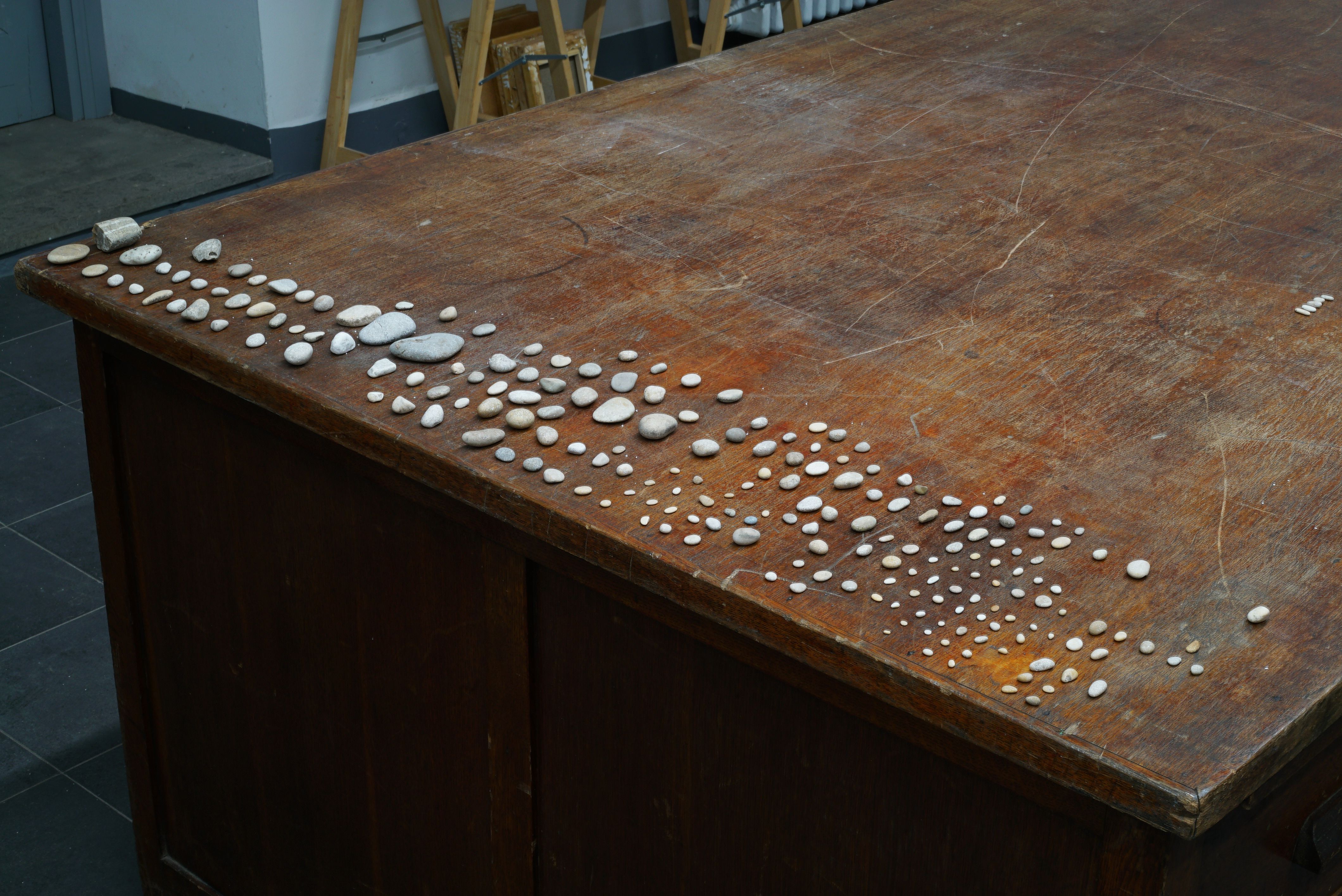
DSC01231.JPG
Ismaïl Bahri, Collected stones, Studio view, Villa Medici, Rome, 2023

There’s a story that those who look for the origin of things love to tell, when it comes to art. It was Pliny the Elder who wrote it down first, many hundreds of years ago, in his Natural History. It offers, as the genesis of the first work of art, an act to which few were witness, of which no one kept a trace, and which could thus easily be established as the ‘first’. The story goes that the daughter of the potter Butades, saddened by her lover’s imminent departure to war, sought to preserve the slightest possible memory of him she could by drawing the outline of his shadow on the wall of her father’s workshop, where they were together for the last time. Hastily, before the shadow projected by the pottery kiln’s flames died down, she sketched the shape of him with a stick of charcoal that fortunately to hand. And thus did the body of that soldier, gone the next day, stay with her a little longer, beyond the departure and the extinguishing of the light; for she reactivated it when the light was lit again. . . and there was art! Born of the desire not to forget, the need to capture what cannot last, the urge to reconstruct what has already disappeared. Pliny’s story retained neither the lovers’ names nor the details of their faces, but that hasn’t stopped the artists who read it from imagining their features. Nor did it prevent that serious story from becoming a solid myth, whereby the nameless daughter of the potter Butades and her shadowy lover have lived happily ever after and had many portraits. With pen, chisel or brush, a good many artists have sought to perpetuate this fine story of love and art.

But what if Pliny got it wrong? What if his story was incomplete? And what if no one had retold it? Where do myths come from, and what makes them endure? Why that girl and that boy, so long ago and in that place? Why has it come to down to us, here and now?

Another beginning to this story might have been when Ismaïl Bahri undertook to measure out his Raoued Beach with rolls of adhesive tape, which fortunately lay to hand in his studio. Or the time when he sought to capture the storm battering some plants he came across in dunes; he found them tracing perfect circles in the sand with the tips of their bent stems as they resisted the wind. Or the time when he found a sweet in his pocket, covered with dust and other particles of life fallen there by chance and in a certain sticky order. Yet another beginning might have been the afternoon when he set out to find the smallest pebble in the garden of the Villa Medici, aided in his impossible quest by residents’ children who happened to be there. Or the day when he discovered the ‘invisible library’ at Herculaneum, which has been carefully preserved since the shifting of ashes from the eruption of Mount Vesuvius, yet without anybody being able to consult it. In glass cases, a whole corpus of books lie, waiting. The lava that destroyed the city so long ago fossilised them and condemned them never more to be opened and read, or else risk crumbling into pieces. What stories, what beginnings and endings, may have been waiting there for centuries to be unrolled? 
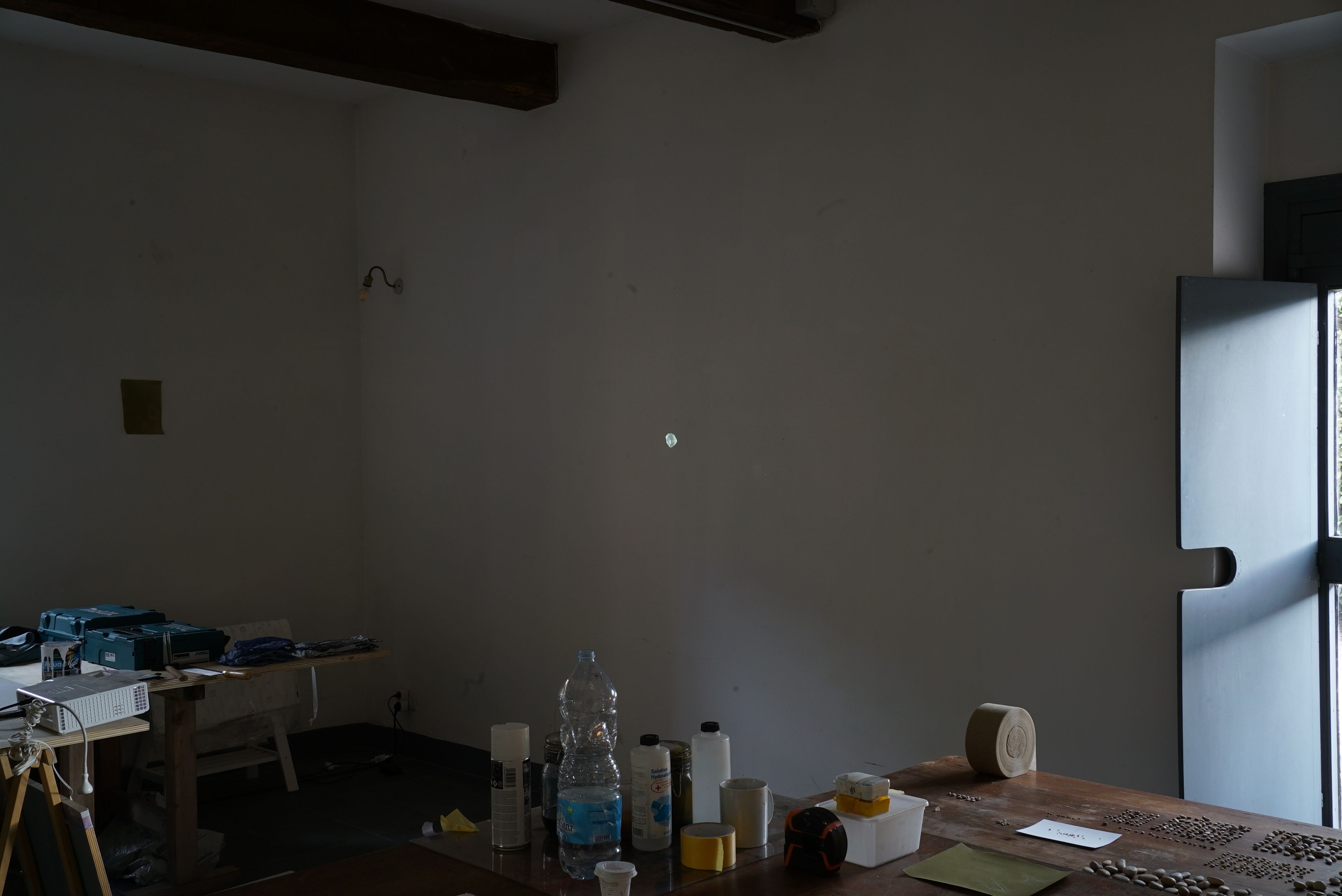
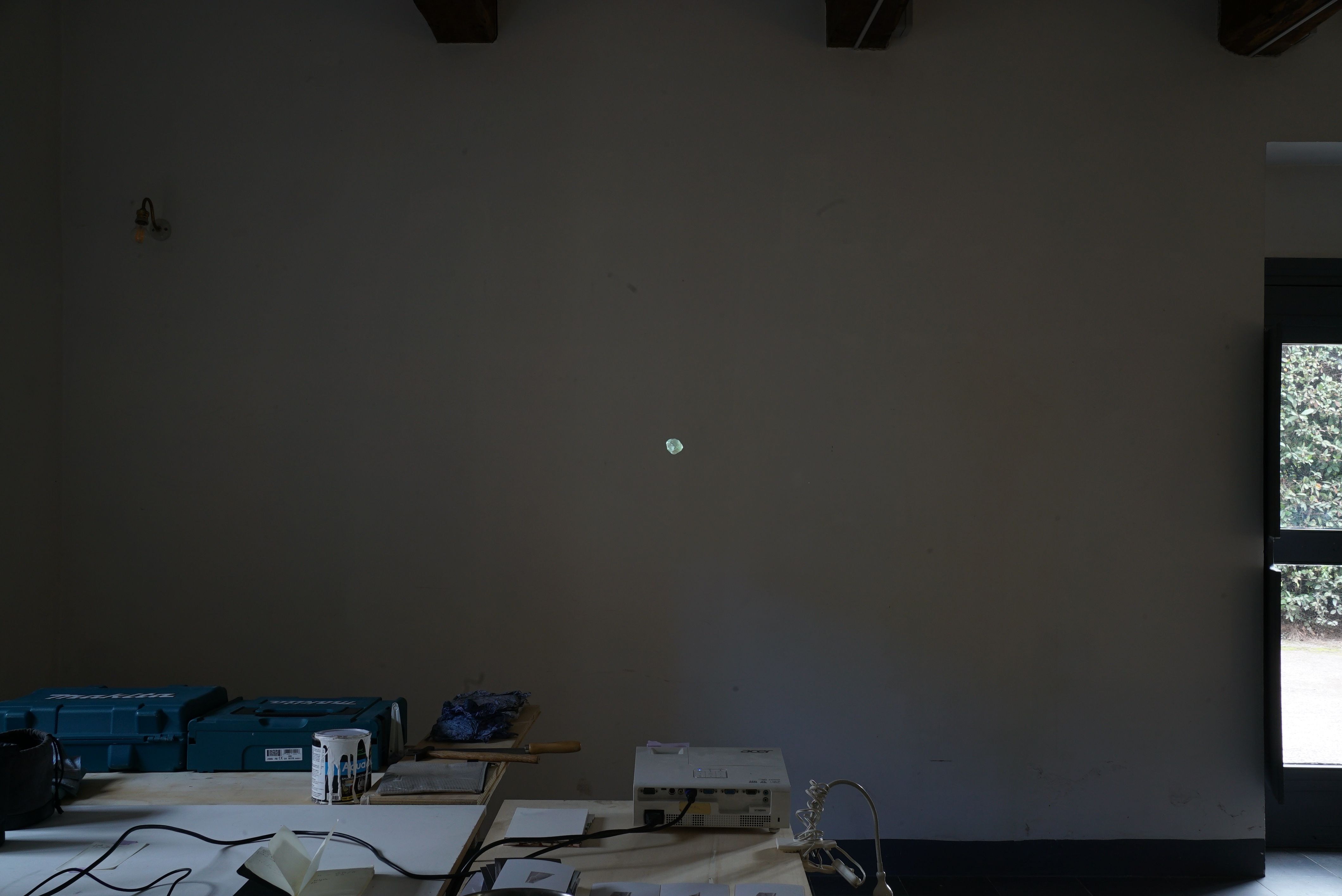
DSC01352.JPG
Ismaïl Bahri, Video projection of filmed stones on the wall, Studio view, Villa Medici, Rome, 2023
DSC01340.JPG
Ismaïl Bahri, Video projection of filmed stones on the wall, Studio view, Villa Medici, Rome, 2023

And what if, buried among them, were the rest of the story told by Pliny the Elder – who died at the foot of the volcano. What if Pliny had told us that the potter Butades’s daughter had not sought so much to trace the shape of her lover but rather the dancing forms projected onto the wall by the flames of her father’s furnace? What if she had found this way of preserving for ever not the only person she once loved, but the moment, the place and the time she spent with him?
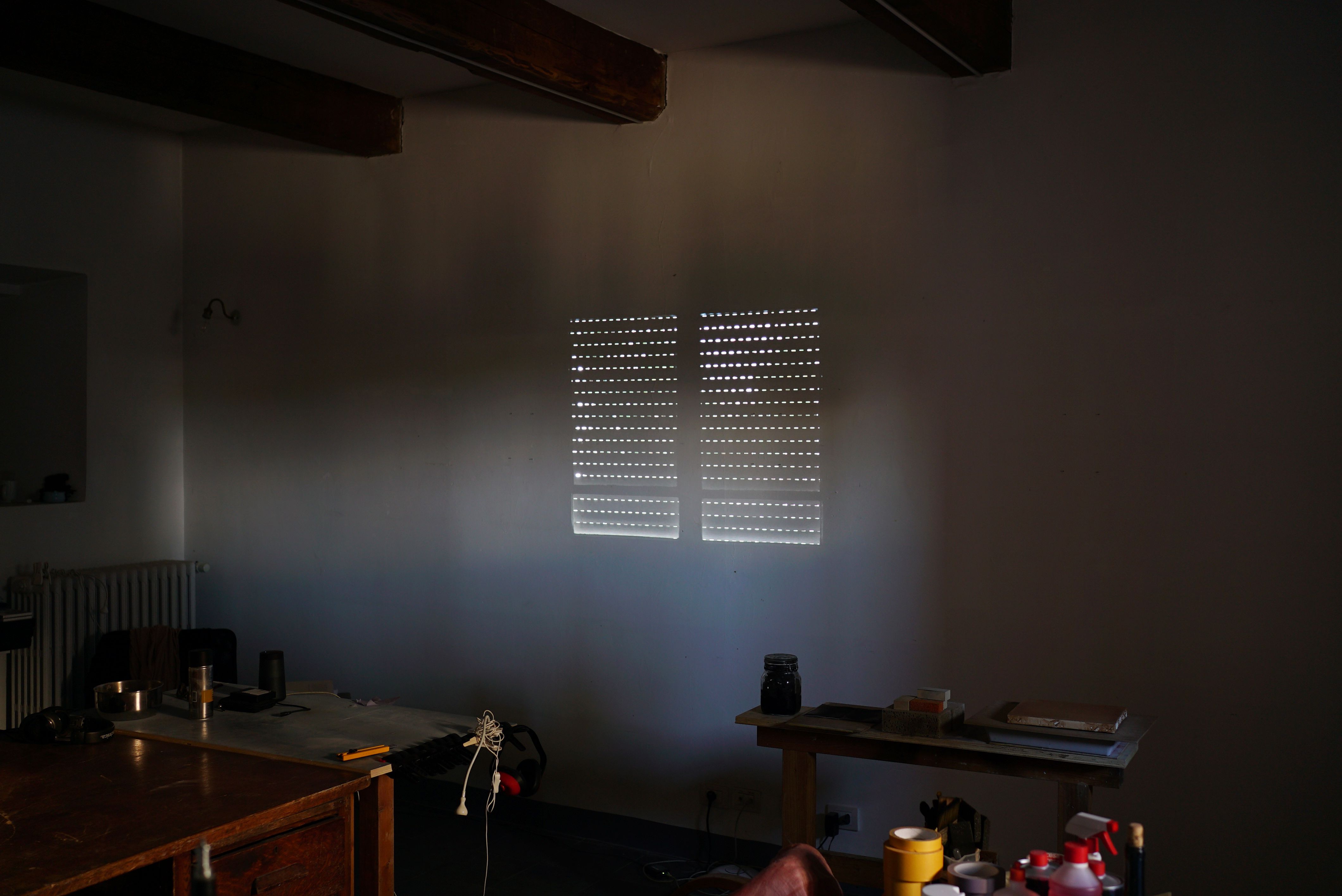
DSC01991.JPG
Ismaïl Bahri, Video projection of "Camera" on the wall, Studio view, Villa Medici, Rome, 2024

What does history remember of something that happens one day? What does it take for a story to become the one we hold in our memory? Thousands of poetic, scientific, historical or sociological words can be put together to form answers to such profound interrogations, but Bahri prefers mysterious questions, chance experiences and play to bewildering or ready-made answers. There must surely be a place from which to look and take in all of the world’s complexity, grasp all of a narrative’s subtexts, identify the smallest pebble from which the gravel has taken form, the indecipherable letter to which the others attach themselves to make a word, the primordial sound around which a melody is composed. It is not by chance but through effort that this place can be found. So, for some time now, he doesn’t know how long, Bahri has endeavoured to try, repeat, fail, try again, abandon, begin again, atomise, zoom in, move out, probe, collect, tape, bore, pierce, hide, show, catch, capture that which always seems to elude us but is in fact right there. This is the merry, endless quest on which the artist has embarked, in search of the container and ultimate component from which stories and worlds spring, of every thing’s ‘native point’ – as he likes to call it and which he prefers to the notion of ‘origin’, which may say where these things come from but not what they are composed of.

Perhaps this native point is to be found in the rays of sunshine that the artist pinned to the walls of Tunis. Perhaps in the circles of fire that he sought to capture on a piece of paper. In the water droplets that he let run along a wire to form a puddle reflecting the world around it. In the streets of his beloved childhood city that he walked around with his camera, covering it with a piece of white paper so as to capture only the legs, hands, fragments of anonymous bodies, the sounds, laughter and words of wisdom or life lessons proffered by those who were drawn to the strange man with the camera. At La Verrière in Brussels where he spent a few days, perhaps he was split into beams, transmitted through the transparent ceiling and diffracted onto the walls through the cracks and crevices, deliberate or accidental, that appeared during this experience. 

Capture d’écran 2024-03-22 à 6.00.24 PM.jpg
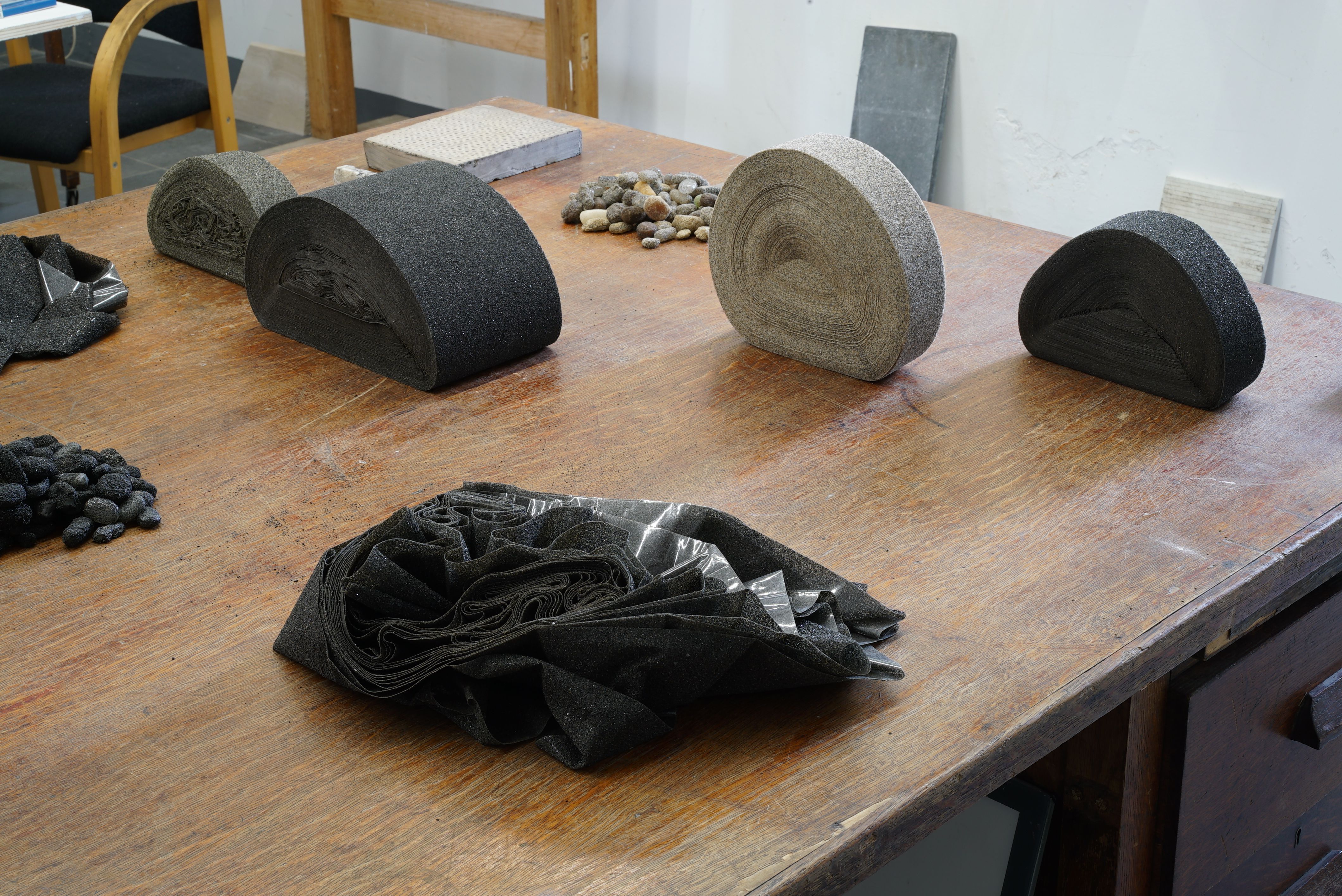
Ismaïl Bahri, Studio view, Volcanic sand on candies, Villa Medici, Rome, 2023

Perhaps this ‘native point’ is nowhere and everywhere, whether it has been there forever or only just appeared. This artist who dislikes definitive answers is not one for giddiness either. There are things that cannot be controlled, he learnt from the ancient philosophers Epicurus and Lucretius. To recognise the things that can and those that will always resist, to seek one’s balance between the two and find one’s way forward: this is the path Bahri has chosen to make his way along, whilst he plays. With his little sweet-pebbles and his fossilised rolls of adhesive tape, with his hands and those of companions encountered along the way, he establishes, as rules, the observation of the world and its materiological dimensions, and as objective, the excavation of what is immanent, of what has always been there, just waiting to be observed. In this unending task, the artist, part archaeologist, part alchemist, likes to change the registers of the things distributed at random until it’s impossible to say which one they originally belonged to.
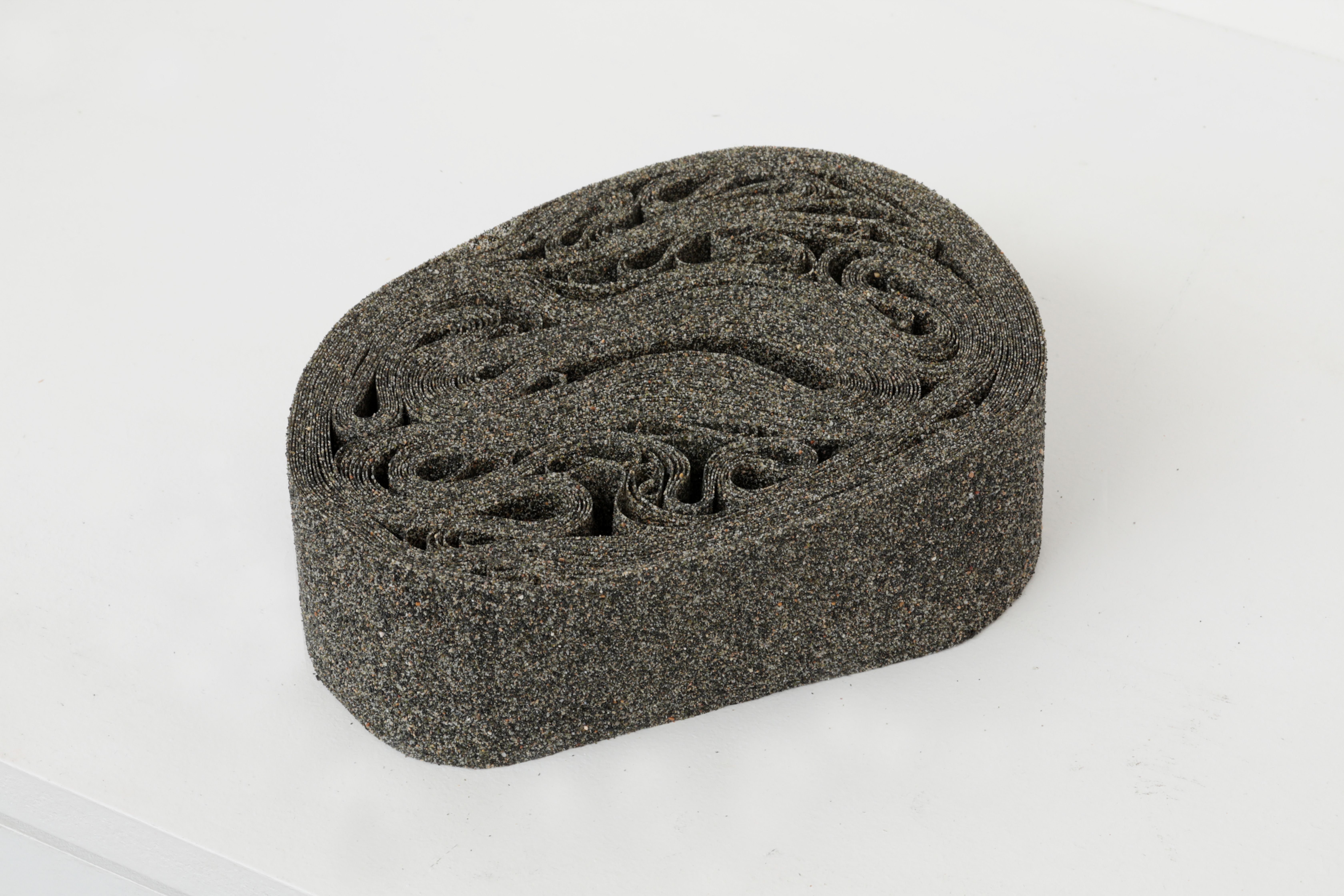
ismail-bahri-film-volcanic-sand-stromboli-villa-medici-rome-2024.jpg
Ismaïl Bahri, Studio view, Volcanic sand on tape, Villa Medici, Rome, 2024
DSC02899.jpg
Ismaïl Bahri,  Volcanic sand on tape, Stromboli island, 2024

Bahri is pursuing his quest this year at Villa Medici, putting off its completion until later. During his strolls in the gardens of the Villa, he has encountered other residents, a few ghosts, and new native points; he still doesn’t ask where they come from, but how they resonate with the world they compose. Together with the cellist Séverine Ballon, he has composed an enigmatic response. During a slow walk, resembling an embrace of the building, they sound out its soul by running a sewing thread against it. Hand, body and thread bring out the stories and vibrations imprinted on the places where they occurred. The artist who sought to capture the five elements here makes use of the five senses, to activate this new exploration of his endless quest. Perhaps it is enough to listen, taste, touch, feel and look in order to discover the meaning of the world around us.

ismail-bahri-studio-villa-medicis-2024.jpg
Ismaïl Bahri, Video still, Tests and explorations, Villa Medici, Rome, 2023

The charcoal contour drawn by the potter Butades’s daughter outlined not only the shadow of her absent lover but also the cavities of the wall on which it was imprinted, for an instant, the carbon material deposited on its surface, the invisible dust clinging to it, its minuscule pigments, the smoke particles scattered by the wind – which must have swept through it all to keep the fire alight. And what if the point of the drawing was in fact to contain all of that in a stroke. What if it was to serve as the thread sewing all these elements together, the better for them to resonate. In their absence, might the story not be serious enough to be told?
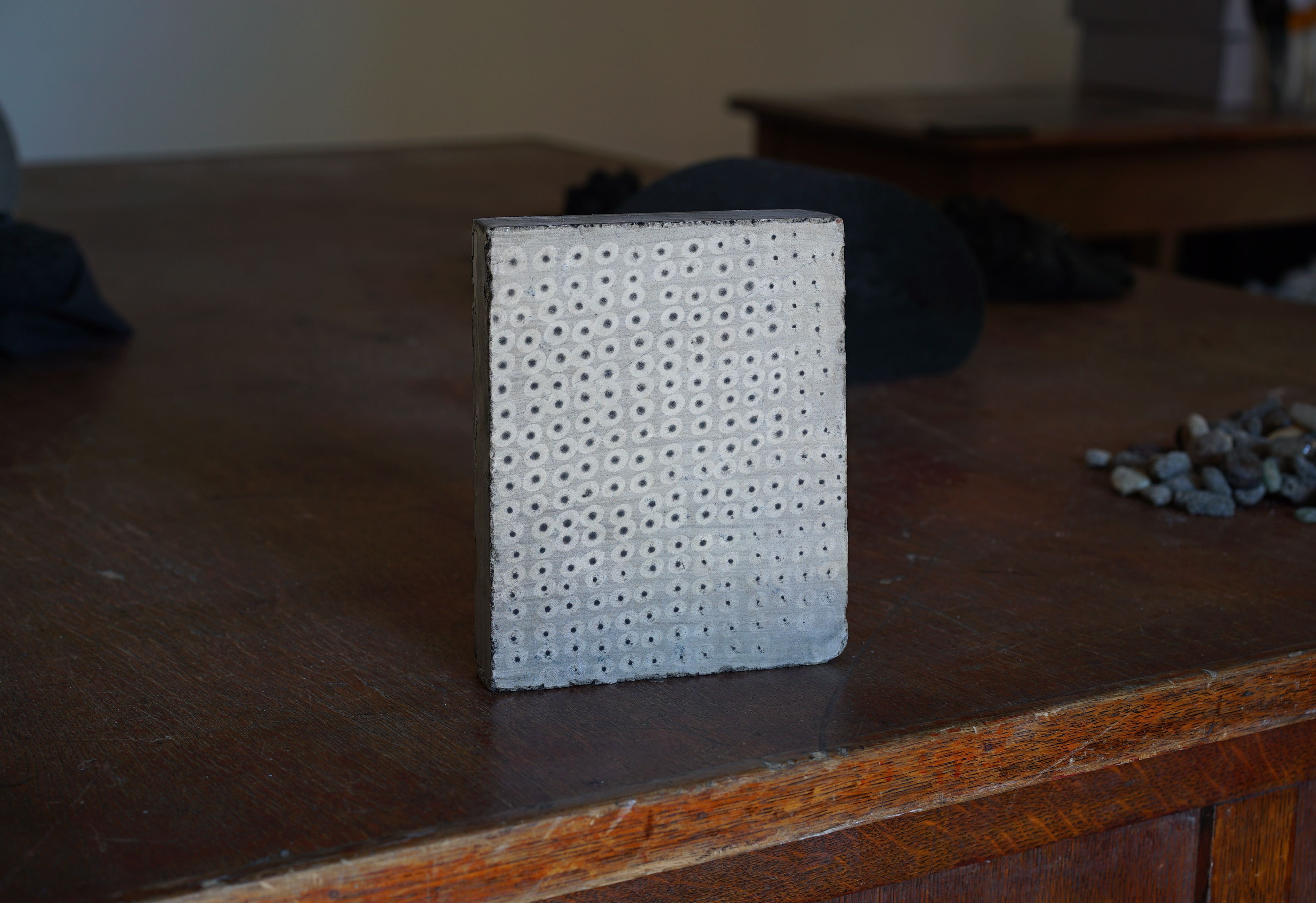
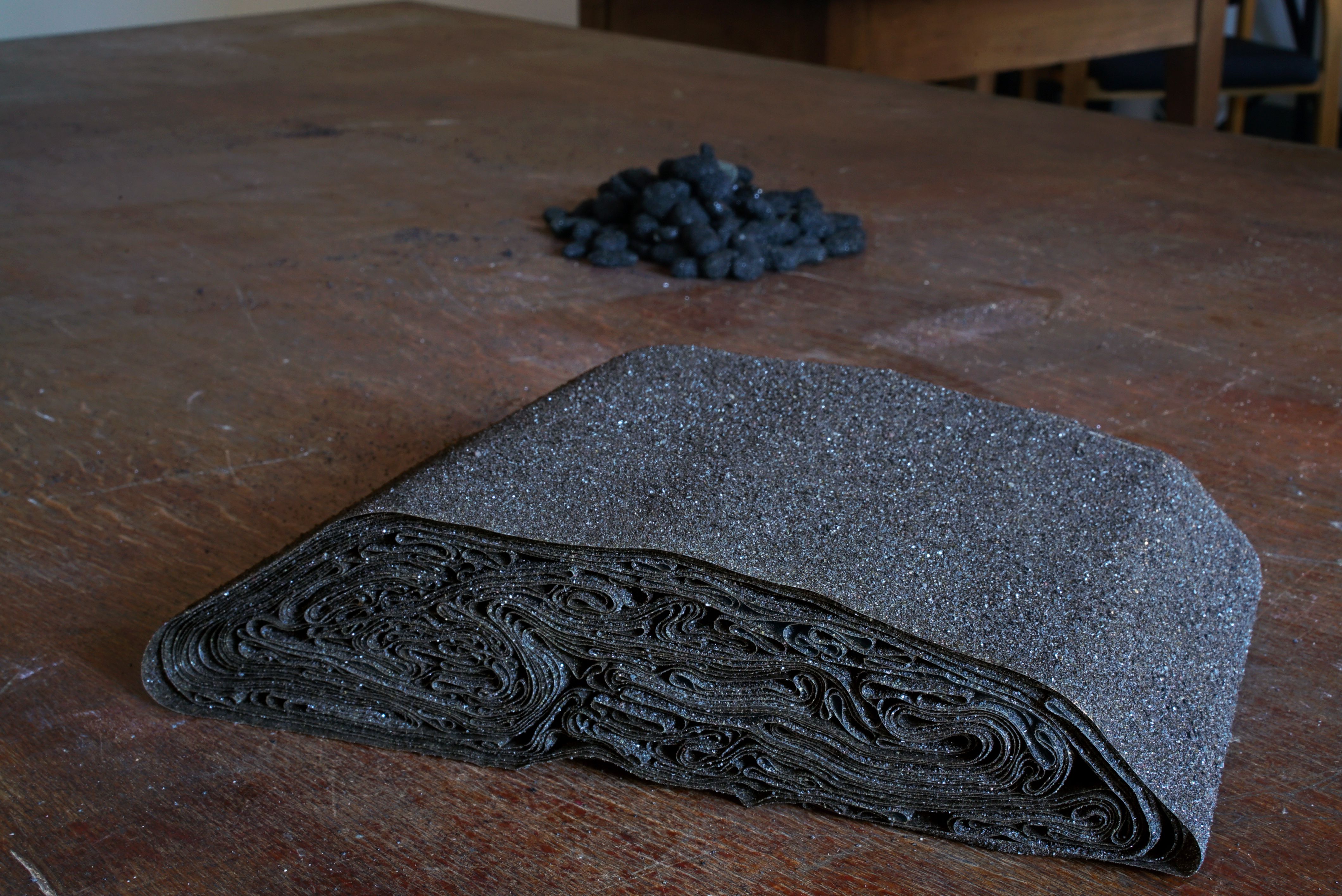
DSC03249_12.jpg
Ismaïl Bahri, Drawing, Carbon ink on marble, Studio view, Villa Medici, Rome, 2024

Dans l'atelier d'Ismaïl Bahri

Dans l'atelier d'Ismaïl Bahri à la Villa Médicis

Horya Makhlouf 


Texte pour le catalogue de l'exposition des pensionnaires A Piu Voci
Villa Médici, Académie de France à Rome
Juin 2024


Lien vers l'exposition A Piu Voci


DSC01231.JPG
Ismaïl Bahri, Vue d'atelier, Pierres récoltées et classées, Villa Medici, Rome, 2023

Il y a une histoire que celles et ceux qui aiment trouver une origine aux choses s’amusent à se raconter lorsqu’il s’agit de parler de celle de l’art. C’est Pline l’Ancien qui l’a écrite le premier, dans son Histoire Naturelle, il y a bien quelques milliers d’années. Elle pose comme point de départ à l’acte artistique ce que peu d’yeux ont vu, ce dont personne n’a conservé l’archive, ce qu’il était donc aisé de déterminer comme « premier ».  Elle raconte que la fille du potier Dibutadès, chagrinée de voir son amant partir à la guerre, a tenté de retenir le plus infime souvenir qu’elle pouvait trouver de lui en ceignant son ombre d’un trait sur le mur de l’atelier de son père, où ils se sont vus pour la dernière fois. À la hâte, avant que l’ombre dessinée par les flammes du four à poterie ne s’évanouisse, elle en a capturé la forme grâce à un fusain que le hasard avait heureusement laissé à portée de sa main. Le corps du soldat, déjà absent le lendemain, est resté avec elle un peu plus longtemps, après que le départ est passé, que la lumière s’est éteinte, qu’elle l’a réactivé quand on l’a rallumée… Et l’art fût ! Né du désir de ne pas oublier, de l’urgence de capturer ce qui ne peut pas durer, de l’envie de recomposer ce qui s’est déjà effacé. L’histoire de Pline n’a retenu ni les noms des amoureux, ni les détails de leurs visages, mais il n’en fallait pas moins aux artistes qui l’ont un jour lue pour leur imaginer des traits. Et l’histoire, sérieuse, de devenir un mythe, solide. À travers lui, la fille sans nom du potier Dibutadès et son ombrageux amant vécurent heureux et eurent beaucoup de portraits… Par la plume, le ciseau ou le pinceau, nombreux sont les artistes qui se sont depuis attachés à faire durer pour toujours cette belle histoire d’art et d’amour. 

Mais, et si Pline s’était trompé ? Et s’il n’avait pas tout raconté ? Et si personne ne l’avait republié ? D’où viennent les mythes et comment perdurent-ils ? Pourquoi elle et lui, il y a si longtemps et là-bas ? Pourquoi jusqu’à nous, ici et maintenant ? 

Un autre début à cette histoire aurait pu être la fois où Ismaïl Bahri a voulu mesurer sa plage de Raoued avec des rouleaux de scotch, que le hasard avait heureusement déposés dans son atelier. La fois, aussi, où il a voulu capturer la tempête venue ébouriffer les plantes sur lesquelles il est tombé au détour d’une dune, qu’il a découvertes tout affairées à résister au vent en dessinant dans le sable des cercles parfaits du bout de leur tige malmenée. La fois, encore, où il a retrouvé un bonbon dans sa poche, recouvert des poussières et autres granulés de vie tombés là par mégarde et en un certain ordre agglomérés. Un début, aussi, aurait pu être l’après-midi où il a voulu trouver le plus petit caillou du jardin de la Villa Médicis, se faisant aider dans sa mission impossible par les enfants des pensionnaires qui passaient par là. Ou bien la journée où, à Herculanum, il a rencontré la bibliothèque invisible, précieusement conservée depuis qu’ont été remuées les cendres laissées par l’éruption du Vésuve, sans que personne ne puisse la consulter. Dans les vitrines, un corpus d’ouvrages gît et attend. La lave qui a détruit la ville il y a bien longtemps les a fossilisés et contraints à ne plus jamais être, depuis, ni ouverts ni lus, sous peine d’être détruits. Quelles histoires, quels débuts et quelles fins attendent peut-être là depuis des siècles d’être déroulés ? 

DSC01352.JPG
Ismaïl Bahri, Vue d'atelier, Projection sur mur, Villa Medici, Rome, 2023
DSC01340.JPG
Ismaïl Bahri, Vue d'atelier, Projection sur mur, Villa Medici, Rome, 2023

Et si, parmi elles, se tenait secrète la suite de ce que Pline l’Ancien – qui trouva d’ailleurs la mort au pied du volcan – avait rapporté ? Et s’il y avait avoué que la fille du potier Dibutadès n’avait, en vérité, pas tant cherché à dessiner les contours de la silhouette de son amant que la danse qu’étaient occupées à projeter sur le mur d’en face les flammes du creuset de son père ? Et si elle avait trouvé là une manière de conserver pour l’éternité non pas la seule personne qu’elle a un jour aimée, mais le moment, le lieu et le temps, passés avec elle ?

DSC01991.JPG
Ismaïl Bahri, Vue d'atelier, Projection sur mur de la vidéo Camera, Villa Medici, Rome, 2023

Que retient l’Histoire de ce qui est un jour arrivé ? Que faut-il à une histoire pour devenir celle dont on se souvient ? Il y a sûrement mille mots poétiques, scientifiques, historiques ou sociologiques à agencer ensemble pour formuler des réponses à ces interrogations profondes, mais aux formules nébuleuses ou toutes faites, Ismaïl Bahri préfère les questions mystérieuses, les expériences hasardeuses et le jeu. Il y a bien peut-être un endroit d’où regarder pour saisir en une fois la complexité du monde, pour comprendre l’intégralité des sous-textes d’un récit, pour identifier le plus petit caillou à partir duquel se compose le gravier, la lettre indéchiffrable à laquelle s’agencent les autres pour faire un mot, le son primordial autour duquel se compose une mélodie… C’est non pas sur le hasard mais sur l’effort qu’il faudra compter pour trouver ce lieu. Alors, depuis un temps qu’il ne saurait compter, Ismaïl Bahri s’attache à essayer, répéter, rater, retenter, résilier, recommencer, atomiser, zoomer, éloigner, sonder, collecter, scotcher, trouer, percer, cacher, montrer, attraper, apprivoiser ce qui, toujours, paraît s’échapper, mais est en vérité juste là. C’est dans une quête, joyeuse et sans fin, que s’est lancé l’artiste, à la recherche du contenant et composant ultime, de ce à partir de quoi naissent les histoires et les mondes, du « point natif » de toute chose – comme il aime à l’appeler et qu’il préfère à la notion d’« origine », qui dit peut-être d’où elles viennent mais pas de quoi elles sont faites. 

Capture d’écran 2024-03-22 à 6.00.24 PM.jpg
Ismaïl Bahri, Vue d'atelier, Bombons ensablés, Villa Medici, Rome, 2023

Peut-être ce point natif se cache-t-il dans les rayons de soleil que l’artiste épinglait aux murs de Tunis. Peut-être dans les cercles de feu qu’il tentait d’apprivoiser sur une feuille de papier. Dans les gouttes d’eau qu’il laissait couler le long d’un fil jusqu’à créer la flaque dans laquelle viendrait se refléter le monde autour d’elle. Dans les rues de sa chère ville d’enfance, qu’il arpentait avec sa caméra, obstruée d’un papier blanc, pour n’en cueillir que les jambes, les mains et les bouts de corps anonymes, les sons, les rires et les adages, ou bien encore les leçons de vie données par ceux que l’étrange homme à la caméra rendait curieux. Peut-être celui-ci se distribuait-il en faisceaux, transmis par le plafond transparent de la Verrière bruxelloise, où il a passé quelques jours et qu’il s’est amusé à diffracter sur tous les murs, par tous les interstices et les fissures, volontaires et accidentels, apparus au cours de l’expérience… 

ismail-bahri-film-volcanic-sand-stromboli-villa-medici-rome-2024.jpg
Ismaïl Bahri, Vue d'atelier, Sable volcanique et scotch, Villa Medici, Rome, 2024

Peut-être ce point natif est-il nulle part et partout, là depuis toujours ou bien éclos hier. L’artiste qui n’aime pas les réponses définitives n’aime pas non plus se laisser prendre par le vertige. Il y a des choses que l’on ne peut pas contrôler, lui ont appris les philosophes antiques Épicure et Lucrèce. Trouver celles qui le peuvent et celles qui résisteront toujours, façonner son équilibre entre les deux et y tracer le chemin que l’on veut y mener : voilà la voie dans laquelle Ismaïl Bahri s’est engouffré, et le long de laquelle il chemine en jouant. Avec ses petits cailloux-bonbons et ses rouleaux de scotch fossilisés, par ses mains et celles des compagnons de voyage rencontrés sur la route, il pose comme règles l’observation du monde et de ses dimensions matériologiques, comme but l’excavation de ce qui est immanent, là depuis le début, qui attendait juste d’être regardé. Dans la partie sans fin qu’il a engagée, l’artiste, un peu archéologue, un peu alchimiste, s’amuse à faire passer d’un registre à l’autre les choses distribuées par le hasard, jusqu’à ne plus savoir duquel elles sont issues en premier. 

DSC03119.JPG
Ismaïl Bahri, Vue d'atelier, Villa Medici, Rome, 2024
DSC02899.jpg
Ismaïl Bahri, Document de travail, Sable volcanique et scotch, Ile de Stromboli, 2024

À la Villa Médicis, cette année, Ismaïl Bahri poursuit sa quête en repoussant sa fin à plus tard. Dans le jardin qu’il a pris plaisir à arpenter, il a rencontré d’autres pensionnaires, quelques fantômes et de nouveaux points natifs, auxquels il ne demande toujours pas d’où ils viennent mais comment ils résonnent avec le monde qu’ils composent. Avec la violoncelliste Séverine Ballon, ils ont composé une réponse qui est encore une énigme. Au détour d’une lente marche qui a tout l’air d’un corps à corps avec le bâtiment, ils font sonner l’âme de l’architecture en y frôlant un fil à coudre. La main, le corps et le fil font résonner les histoires et les vibrations que ces dernières impriment aux lieux dans lesquels elles se déploient. Celui qui voulait apprivoiser les cinq éléments en appelle aux cinq sens pour activer le nouveau tour de sa partie infinie. Et s’il suffisait d’écouter, goûter, toucher, sentir et regarder pour découvrir le sens du monde qui nous entoure ?

ismail-bahri-studio-villa-medicis-2024.jpg
Ismaïl Bahri, Document de travail, Vidéo, Villa Medici, Rome, 2024

Dans le contour qu’a dessiné au fusain la fille du potier Dibutadès a été ceinte l’ombre de son amant absent, mais aussi les cavités du mur sur lequel elle s’est imprimée un instant, le grain du charbon déposé sur sa surface, la poussière invisible accrochée à elle, les pigments minuscules de son revêtement, les particules de fumée dispersées par le vent – qui a bien dû s’engouffrer dans l’histoire pour tenir le feu allumé. Et si, en vérité, son dessin n’avait été qu’un défi lancé pour tenter de contenir tout cela en un trait ? Et s’il avait été le fil qui avait voulu les coudre ensemble pour mieux les faire résonner ? L’histoire qui n’a pas retenu tous ces éléments ne serait-elle pas assez sérieuse pour être racontée ? 

DSC03249_12.jpg
Ismaïl Bahri, Dessin sur marbre, Vue d'atelier, Villa Medici, Rome, 2024